
Table of Contents
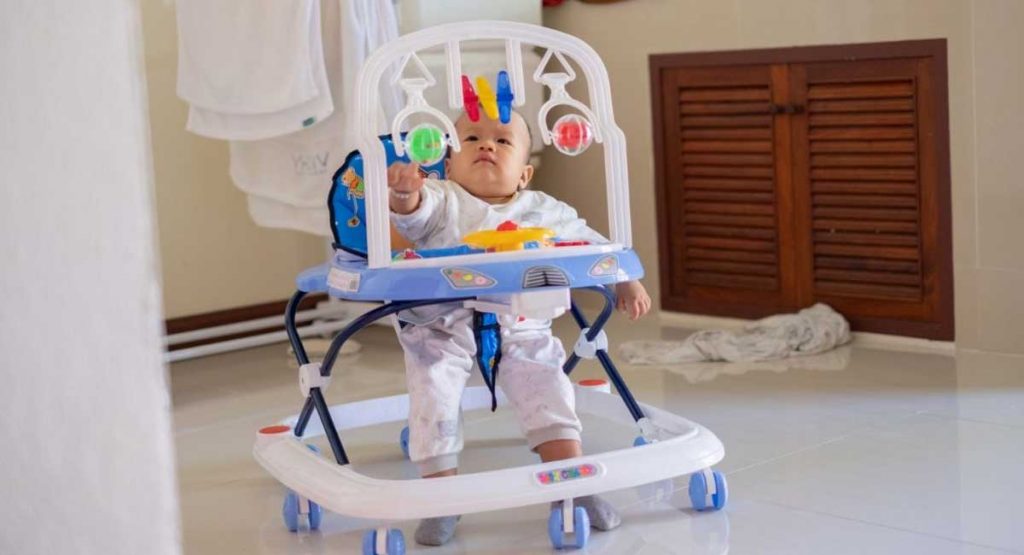
A baby in a wheeled walker can cross a room, and reach the top of a staircase, in under a second. That single fact sits behind a fresh recall this month and behind a fight pediatricians have been waging for more than twenty years to get these products off store shelves entirely. Most parents who own one have no idea the American Academy of Pediatrics has spent two decades asking for a nationwide ban, not just a warning label.
The Consumer Product Safety Commission announced this month that Wonder Stone Toys is recalling its WonderStone-branded infant walkers, sold in green and pink on Walmart.com, after finding the walkers violate the federal safety standard built specifically to stop stair falls. The walkers can fit through a standard doorway and fail to stop at the edge of a step, the exact failure the mandatory standard was written to prevent. About 70 units were sold before the recall, and no injuries have been reported so far. Parents who own one, model numbers 616 or 616-1, gray fabric seat, white tray, detachable music box, six wheels, are told to stop using it immediately and contact the company for a refund. The walkers were sold in green and pink, small enough numbers that most parents will never encounter this exact model, but the recall notice reads like a checklist of everything a federal walker standard is supposed to prevent.
A Small Recall, a Much Bigger Warning
Seventy units is a tiny number next to the recalls that usually make headlines. What makes this one worth a second look is what it reveals about the entire product category. The federal standard for infant walkers addresses a specific, well-documented danger: a baby strapped into a wheeled walker gains speed and height that a crawling baby simply does not have, and stairs turn that speed into a fall.
Data collected by the Consumer Product Safety Commission and reviewed by pediatric researchers found that more than 230,000 children under 15 months old were treated in emergency departments for walker-related injuries between 1990 and 2014. Roughly 74 percent of those injuries came from falls down stairs, and head injuries were common. A child in a moving walker can travel more than 3 feet in a single second, fast enough to reach a staircase before a parent standing a few feet away can cross the room.
The American Academy of Pediatrics has not stopped at warning parents about faulty units. Starting in 2004, the organization has called for a full ban on manufacturing and selling wheeled infant walkers in the United States. Canada already banned the sale, import, and advertising of baby walkers outright in 2004. The United States has not followed, leaving a patchwork of safety standards, recalls, and warning labels instead of an outright ban.
What Pediatric Safety Researchers Say
Researchers who study walker injuries point to a specific problem with relying on standards and warning labels alone: most walker injuries happen while a parent is right there, watching. A baby in a walker does not need a distracted caregiver to get hurt. The walker itself removes the built-in slowness that protects a baby who is crawling or cruising along furniture. Crawling gives a baby time to feel an edge and stop, while a walker’s wheels carry a baby past that edge before anyone can react.
Pediatric researchers who reviewed decades of injury data have found that education campaigns, stair gates, and adult supervision all reduce walker injuries somewhat, but none of them eliminate the risk. The physics of a wheeled walker on a staircase stay the same no matter how careful a household tries to be. That is the argument behind the AAP’s ban recommendation: some products carry a design flaw that no amount of parental vigilance fully offsets.
Beyond stairs, researchers also flag walkers for letting babies reach hot stovetops, cleaning products, and other hazards that would normally sit safely out of reach of a baby who can only crawl. A walker adds height and reach a baby’s own development has not caught up to yet.
What This Means for Parents
If you own a WonderStone walker matching this recall, stop using it today and contact the company for a refund rather than passing it along to another family or reselling it. But the bigger takeaway extends past this one recall. Given the AAP’s stance, many pediatricians recommend skipping wheeled walkers altogether, recalled or not, and reaching for alternatives that support a baby’s own developing balance instead.
Stationary activity centers, the kind that spin, bounce, or rock in place without wheels, give a baby the same standing and playing experience without the ability to roll toward a staircase. Push toys that a baby walks behind, once they are already pulling up and cruising along furniture, build the same leg strength without adding speed a baby cannot yet control. Plain floor time, with furniture nearby for pulling up, remains the option every major pediatric group recommends first.
None of these alternatives develop walking any slower than a wheeled walker does. Pediatric researchers have found that walkers do not actually speed up when babies learn to walk independently, and some studies point the opposite direction: babies spend less time practicing the balance and coordination that unassisted crawling and cruising build. A wheeled walker trades a real developmental skill for a few minutes of hands-free time, on top of the fall risk.
If a walker is already in your home, a stair gate helps but should not be treated as a full solution given how quickly a baby can reach it. The safest move researchers point to again and again is removing the wheeled walker from the house rather than managing around it.
Grandparents and hand-me-down gear deserve a mention here too. Walkers often get passed between siblings, cousins, or friends, and a walker bought a decade ago could easily fall short of the current federal standard, recall or no recall. If a walker in your home did not come with its original packaging and safety documentation, there is no easy way to confirm it passes the doorway and step-edge tests regulators require today. Treat any older, secondhand walker with the same caution as a recalled one, and check the CPSC’s recall database by brand and model number before letting a baby use it.
How This Recall Happened
Federal law requires every wheeled infant walker sold in the US to pass a specific mechanical test: the walker has to be wider than a standard doorway, or it has to stop itself at the edge of a step through a gripping or braking mechanism. Either feature is meant to work as a backup for the moments when a gate is left open or a baby finds a gap a parent missed. The WonderStone walkers failed both parts of that test. They fit through a normal doorway opening, and they kept rolling instead of stopping at a simulated step edge.
The recall notice lays out a detailed return process: owners are asked to disassemble the walker, remove and cut the fabric seat, write “Recalled” on the tray in permanent marker, and email photos showing the disassembled parts before the company will process a refund. It is an unusually hands-on remedy, and it reflects how seriously regulators treat a walker that fails the fall-prevention test the entire product category is built around.
Why the US Still Sells What Canada Banned Outright
Canada’s approach shows a different path was possible. In 2004, Health Canada banned the sale, import, and advertisement of baby walkers nationwide, full stop, treating the injury data as reason enough to remove the product category rather than regulate around it. The US instead layered mandatory design standards, warning labels, and voluntary recalls on top of a product still legally sold in stores and online.
Consumer advocates have pushed for years to close that gap, arguing that a design standard aimed at reducing stair falls still leaves too much room for products like the WonderStone walkers to slip through before anyone catches the flaw. Every recall adds to a track record regulators and pediatric groups point to when they argue the standard itself, not just individual bad products, deserves another look.
Why This Debate Keeps Coming Back
Wheeled walkers remain popular for one simple reason: they buy parents a few quiet minutes, and older generations often remember using one as a baby with no memory of harm. That gap between lived experience and injury data is exactly what keeps this fight alive two decades after the AAP’s first call for a ban. A product can sit in millions of homes for years without incident and still carry a design flaw that shows up the moment a baby, a set of stairs, and an unlucky second line up. This recall is small. The pattern behind it is not, and it is the reason pediatricians keep bringing up a ban long after most parents assumed the safety debate had settled.