
Table of Contents
- Give each child regular one-on-one time. Rivalry drops fast when kids stop competing for your attention.
- Coach instead of referee. Name what each child needs rather than deciding who was right.
- Skip comparisons entirely, including “your sister never acted like this.” Kids remember these lines for years.
Two kids yelling over the same toy for the third time this hour can make any parent wonder what they’re doing wrong. Helping siblings get along is less about stopping every fight and more about giving kids the tools to work through conflict on their own, a skill that takes years to build and rarely shows up overnight.
This guide covers what drives sibling conflict at different ages, how to step in without picking sides, the daily habits that lower the temperature at home, and when fighting has crossed into something that needs outside support. The short answer: protect the individual bond you have with each child, coach rather than judge, and treat most day-to-day squabbles as practice rather than a problem to solve for them.
Why Siblings Fight in the First Place
Most sibling conflict comes down to a short list of causes: competition for a parent’s attention, disputes over shared space and belongings, and a sharp sense of fairness that flares up any time one child feels treated differently than the other. Clinical psychologist Dr. Becky Kennedy points to attachment security as the root of much of it. When a child feels solidly connected to a parent, they have far less need to compete with a sibling for that same reassurance.
Close age gaps and same-sex sibling pairs tend to produce more friction. Those kids are drawing on the same limited pool of toys, friends, and parental bandwidth at the same developmental stage. None of this means something is wrong with your family. Conflict between siblings is close to universal, and the research is clear that some amount of it is normal and even useful for building negotiation and emotion regulation skills that carry into adulthood.
What Fighting Looks Like at Each Age
Toddlers fight over possession, full stop. A toddler who grabs a toy back the instant a younger sibling touches it isn’t being selfish in the way an adult would define it. They’re still learning the concept of sharing and don’t yet have the language to negotiate, so grabbing is often the fastest tool they have.
Preschoolers fight often and impulsively, usually over turns, games, and whoever got to the swing first. At this age, kids are also starting to test limits with each other the same way they test limits with parents, which can look like deliberate provocation even when it isn’t fully intentional.
School-age kids argue more about fairness and comparison. A child this age might track exactly how many minutes of screen time a sibling got or count who received the bigger slice. A strong sense of justice develops well before the ability to let small inequities go.
Preteens and teens fight less with their fists and more with words, often over privacy, borrowed belongings, or one sibling feeling embarrassed by the other in front of friends. Research also points to ages ten through fifteen as a peak window for sibling competition, most of all around achievement and comparison.
The Role a New Baby Plays
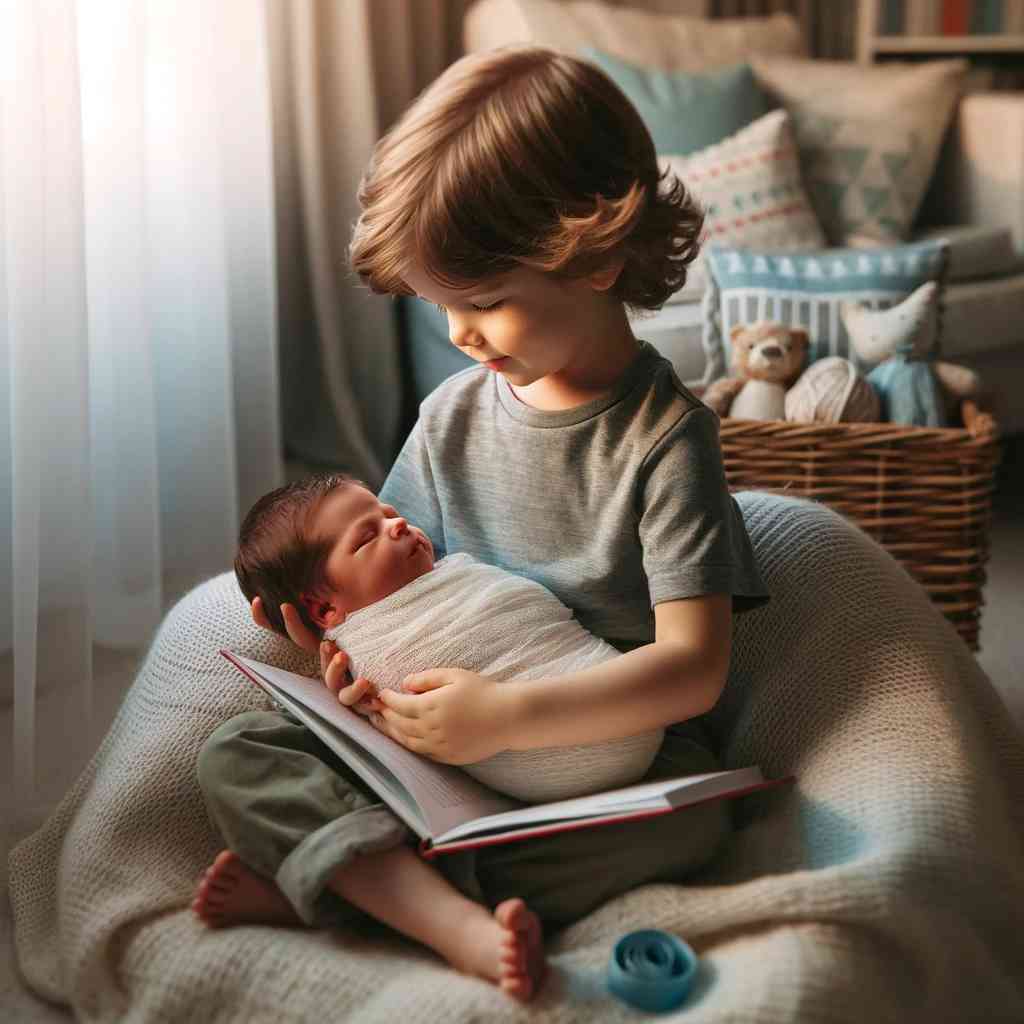
A large share of sibling conflict traces back to a single event: the arrival of a new baby. An older child who was once the sole focus of a parent’s attention suddenly has to share that attention indefinitely, and the grief and jealousy that can follow are real, even when the older child also loves the baby.
Regression is common in the months after a new sibling arrives. A recently potty-trained four-year-old might start having accidents again, or a child who slept through the night might start waking and asking for a parent. This isn’t a behavior problem to correct so much as a signal that the child needs reassurance that their place in the family is secure. Naming it directly, something like “it’s a big change having a new baby here, and I still have plenty of time for just us,” tends to help more than ignoring the regression and hoping it passes on its own.
Involving an older sibling in small, real ways with the baby, picking out an outfit, choosing a song to sing, holding the baby with support, gives them a role instead of leaving them to feel replaced.
Coach the Conflict Instead of Refereeing It
Jumping in to declare a winner every time siblings clash teaches them to appeal to a parent instead of working things out between themselves. A more useful role is coaching: stepping in only to keep everyone physically safe, naming what each child seems to need, and walking them toward a solution rather than announcing one.
In practice, that might sound like: “You both want the same toy. What’s a plan that could work for both of you?” instead of “Give it back, it’s her turn.” The first approach hands the problem back to the kids with support. The second solves it for them and leaves the underlying tension exactly where it was.
For younger children who don’t yet have the words for this, narrate the feelings out loud. “You’re upset. You wanted to go first” gives a preschooler language they can eventually use on their own, without a parent standing over them each time.
Daily Habits That Lower the Temperature
Individual, undivided time with each child on a predictable basis does more to prevent fighting than any in-the-moment intervention. Even fifteen minutes of one-on-one time with no siblings present, no phone, and no agenda tells a child they don’t have to fight for attention. They already have it.
Avoid direct comparisons entirely, including the ones that feel harmless in the moment. “Your brother finished his homework already” or “Why can’t you sit still like your sister” plants a seed of resentment that tends to outlast the moment it was said in. Kids hear these comments as evidence that they’re loved a little less, even when that’s nowhere close to what the parent meant.
Set a few clear, consistent house rules that apply to both kids rather than negotiating fresh terms every time. Trading off who picks the show, who gets the front seat, or who chooses the bedtime story on a rotating basis heads off a good portion of the “it’s not fair” arguments before they start.
Praise the moments kids get along, not just the ones where they fought. A specific comment like “I noticed you two worked out the puzzle together” reinforces cooperation the same way ignoring good behavior and only reacting to bad behavior teaches kids that fighting is what gets a parent’s attention.
What Parents in the Trenches Say Helps
Parents who’ve been through years of sibling conflict often describe a turning point once they stopped trying to referee every dispute. Several mention setting up simple, visible systems, like a whiteboard schedule for whose turn it is on the tablet or the front seat, that remove the parent from having to make a judgment call dozens of times a day.
Others point to protected one-on-one outings, even something as small as a weekly trip to get a coffee or a treat with just one kid, as the change that made the biggest dent in daily bickering. A common thread across these accounts: kids who feel secure in their spot in the family have far less reason to compete for it.
When Sibling Conflict Needs Extra Support
Ordinary sibling friction doesn’t need a professional. Reach out to a family therapist or child psychologist if fighting is frequent and intense enough to cause injuries, if one child consistently targets the other with cruelty rather than typical disagreement, if a child seems fearful of a sibling rather than simply annoyed, or if the conflict is affecting sleep, school, or your child’s overall mood outside the moments of actual fighting.
A pediatrician is a solid first stop if you’re unsure whether what you’re seeing crosses that line. They can point you toward a family therapist who specializes in sibling dynamics if a deeper look makes sense.
It also helps to separate typical roughhousing from real aggression before deciding a fight needs intervention. Play fighting between siblings usually includes laughing, easy stopping when one child says stop, and both kids wanting to continue afterward. Real aggression tends to look one-sided, doesn’t stop on request, and leaves one child upset or in tears well after the moment has passed. Learning to tell the two apart saves a lot of unnecessary refereeing and helps you save your energy for the conflicts that truly need it.
Key takeaways:
- Give each child protected one-on-one time on a predictable basis. Attention scarcity drives a large share of sibling rivalry.
- Coach rather than referee. Ask what solution could work for both kids instead of deciding who’s right.
- Cut out comparisons between siblings entirely, even ones that feel small or harmless in the moment.
- Expect grabbing at toddler age, impulsive turf wars at preschool age, fairness arguments at school age, and privacy-driven friction in the teen years.
- Talk to a professional if fighting is frequent, physically unsafe, one-sided, or affecting your child’s mood or sleep beyond the fight itself.